
 Continue with Google
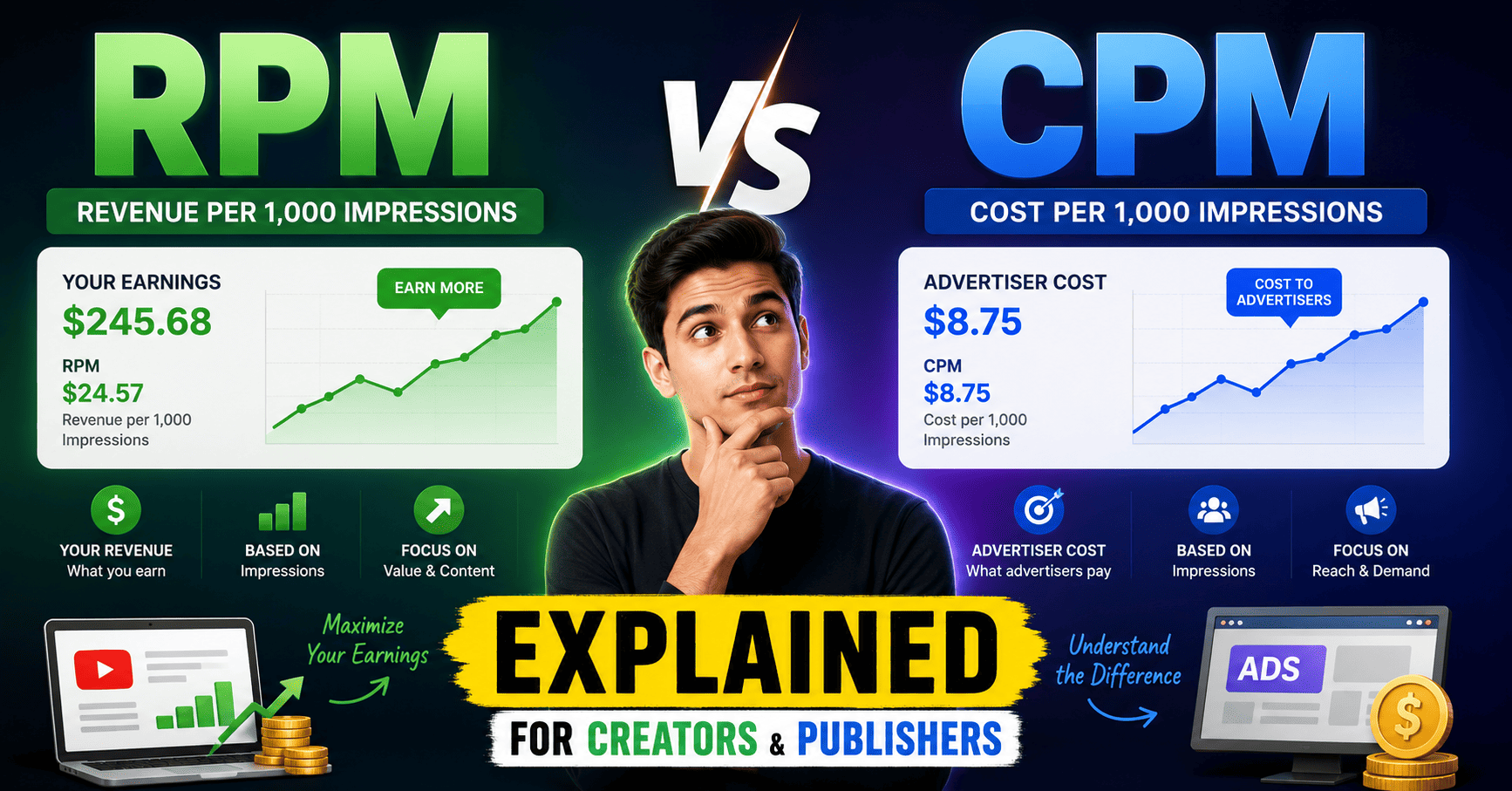
RPM vs CPM Explained: What Creators and Publishers Need to Know
Most creators obsess over CPM screenshots.
You’ve probably seen them:
“My finance channel gets a $60 CPM!”
“This niche pays insane ad rates!”
“YouTube RPM secrets revealed!”
But here’s what many creators still misunderstand in 2026:
High CPM does not automatically mean high earnings.
That’s because CPM and RPM measure completely different things.
Understanding the difference can dramatically improve:
your monetization strategy,
niche selection,
ad optimization,
and overall content profitability.
Whether you run:
a YouTube channel,
niche blog,
media website,
or display ad business,
this guide will break down RPM vs CPM in simple language — without the confusing advertising jargon.
What Is CPM?
CPM stands for:
Cost Per Mille
“Mille” is Latin for 1,000.
CPM measures how much advertisers pay for:
1,000 ad impressions.
In simple terms:
CPM reflects advertiser spending.
CPM Formula
CPM=Ad CostImpressions×1000CPM = \frac{Ad\ Cost}{Impressions} \times 1000CPM=ImpressionsAd Cost×1000
For example:
If an advertiser spends:
$50
to receive:10,000 impressions
the CPM would be:
$5
What CPM Actually Tells You
CPM answers this question:
“How valuable is this audience to advertisers?”
That’s why certain niches consistently have higher CPMs.
High CPM Niches in 2026
Advertisers pay premium rates in industries where customers are highly valuable:
Finance
Insurance
SaaS
AI tools
Real estate
Investing
B2B software
Legal services
A finance blog can sometimes generate:
$30–$100 CPM
while entertainment content may only see:
$2–$8 CPM.
The reason is simple:
advertisers make more money from high-intent customers.
What Is RPM?
RPM stands for:
Revenue Per Mille
Unlike CPM, RPM measures:
what creators or publishers actually earn.
This is the metric most creators should care about.
RPM Formula
RPM=Total EarningsTotal Views×1000RPM = \frac{Total\ Earnings}{Total\ Views} \times 1000RPM=Total ViewsTotal Earnings×1000
RPM includes:
ad revenue,
memberships,
subscriptions,
affiliate bonuses,
YouTube Premium revenue,
and other monetization streams depending on the platform.
RPM vs CPM: The Main Difference
Here’s the easiest way to understand it:
Metric | Measures | Perspective |
|---|---|---|
CPM | Advertiser spend | Advertisers |
RPM | Actual earnings | Creators & publishers |
Think of CPM as:
the gross amount advertisers pay.
Think of RPM as:
your net earning performance.
That’s why RPM is usually lower than CPM.
Platforms take a percentage before paying creators.
Why RPM Matters More for Creators
A high CPM looks exciting.
But RPM determines your actual business profitability.
Example Scenario
Imagine two YouTube creators:
Creator | CPM | RPM |
|---|---|---|
Finance Creator | $40 | $9 |
Gaming Creator | $12 | $11 |
Even though the finance creator has a much higher CPM:
the gaming creator earns more per 1,000 views.
Why?
Because RPM depends on:
watch time,
audience retention,
monetized playbacks,
ad density,
memberships,
and viewer behavior.
This is why experienced creators focus on:
total monetization efficiency,
not just advertiser rates.
Factors That Affect CPM in 2026
CPM changes constantly based on:
niche,
geography,
seasonality,
audience quality,
and advertiser demand.
1. Audience Location
Traffic from:
the United States,
Canada,
UK,
and Australia
usually generates higher CPMs than developing regions.
That’s because advertisers spend more aggressively in high-income markets.
2. Content Niche
Educational and business-focused content tends to attract premium advertisers.
High-intent audiences are more profitable.
For example:
“Best AI software for agencies”
will likely earn far more than:“Funny cat compilation.”
3. Seasonal Advertising
CPMs usually spike during:
Q4 holidays,
Black Friday,
and year-end campaigns.
Many publishers earn significantly more during November and December.
4. Audience Purchase Intent
Advertisers pay more when audiences are ready to buy.
Search-driven traffic often produces stronger CPMs because users already have intent.
Factors That Affect RPM
RPM is more complex because it reflects creator performance.
1. Audience Retention
Longer watch time means:
more ads shown,
higher engagement,
and stronger monetization.
2. Monetized Playbacks
Not every view shows ads.
Ad blockers, skipped ads, and inventory shortages affect RPM heavily.
3. Additional Revenue Streams
Creators with:
memberships,
affiliate income,
courses,
or subscriptions
often achieve much higher RPM.
This is why diversified creators outperform ad-dependent creators long term.
RPM vs CPM for Blogs
Website publishers often confuse these metrics too.
CPM for Display Ads
Display ad networks calculate CPM based on:
ad impressions.
This is advertiser-focused.
RPM for Website Earnings
Website RPM measures:
revenue generated per 1,000 pageviews.
For bloggers and publishers, RPM gives a clearer profitability picture.
If you want to estimate your advertising performance, you can use:
These tools help creators and publishers calculate projected earnings and advertising efficiency more accurately.
Which Metric Should You Optimize?
The answer depends on your business model.
Focus on CPM If You Want:
premium advertisers,
better niches,
high-value audiences,
and stronger ad demand.
Focus on RPM If You Want:
higher actual earnings,
better monetization systems,
diversified revenue,
and long-term creator profitability.
For most creators:
RPM is the more important metric.
Because revenue matters more than advertiser pricing alone.
The Smartest Monetization Strategy in 2026
The highest-earning creators no longer rely entirely on ads.
Instead, they combine:
display advertising,
affiliate marketing,
sponsorships,
digital products,
memberships,
and owned communities.
This dramatically improves RPM.
The Monetization Stack Framework
Smart creators build multiple income layers:
Revenue Layer | Purpose |
|---|---|
Ads | Passive baseline income |
Affiliates | High-intent conversions |
Sponsorships | Premium campaigns |
Products | Scalable ownership |
Memberships | Recurring revenue |
This reduces dependence on fluctuating ad markets.
Common RPM and CPM Mistakes
1. Chasing High CPM Niches Blindly
A high CPM niche does not guarantee success.
Competition, audience fit, and expertise matter more.
2. Ignoring Audience Retention
Better retention often increases RPM more effectively than chasing advertisers.
3. Overloading Ads
Too many ads hurt:
user experience,
retention,
and long-term growth.
4. Depending Only on Ad Revenue
The strongest creator businesses diversify income aggressively.
Final Thoughts
RPM and CPM are both important — but they serve different purposes.
CPM tells you:
how advertisers value your audience.
RPM tells you:
how effectively you monetize that audience.
Understanding this difference helps creators make smarter strategic decisions about:
content,
niches,
monetization,
and audience growth.
The creators winning in 2026 are no longer focused only on views.
They focus on:
monetization quality,
audience intent,
and revenue efficiency.
Because in modern content businesses:
profitable audiences matter far more than viral traffic.
FAQ: RPM vs CPM Explained
What is the difference between RPM and CPM?
CPM measures advertiser spending per 1,000 impressions, while RPM measures creator or publisher earnings per 1,000 views.
Which is better: RPM or CPM?
RPM is more useful for creators because it reflects actual earnings.
Why is RPM lower than CPM?
Platforms like YouTube and ad networks keep a percentage of advertising revenue before paying creators.
What is a good RPM in 2026?
Good RPM varies by niche, but many creators aim for:
$5–$25 RPM depending on traffic quality and monetization methods.
Why do finance channels have higher CPM?
Finance advertisers pay more because customer acquisition value is extremely high in banking, investing, and insurance industries.
Can you increase RPM without increasing views?
Yes. Better retention, stronger monetization, affiliate income, and memberships can increase RPM significantly.